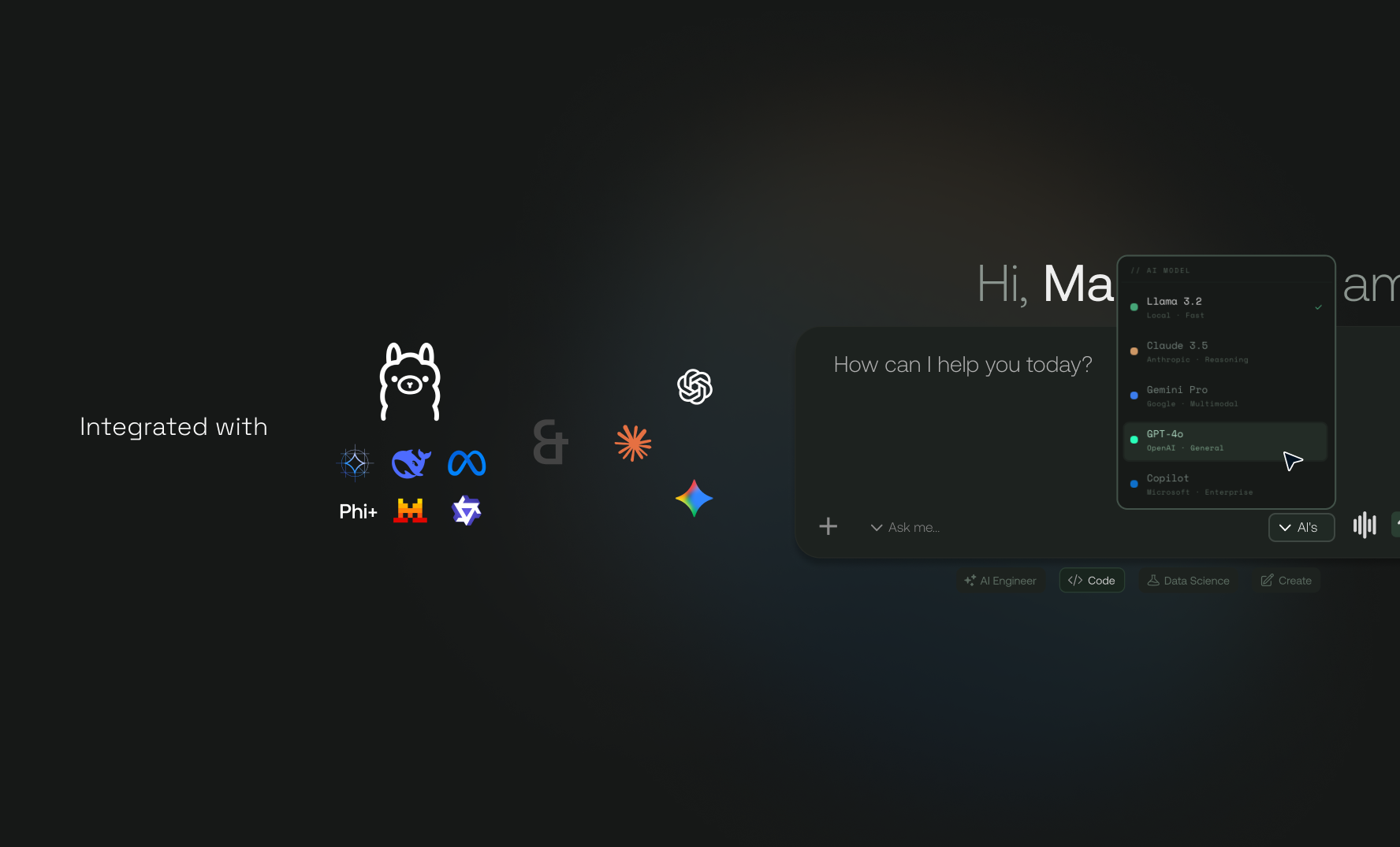
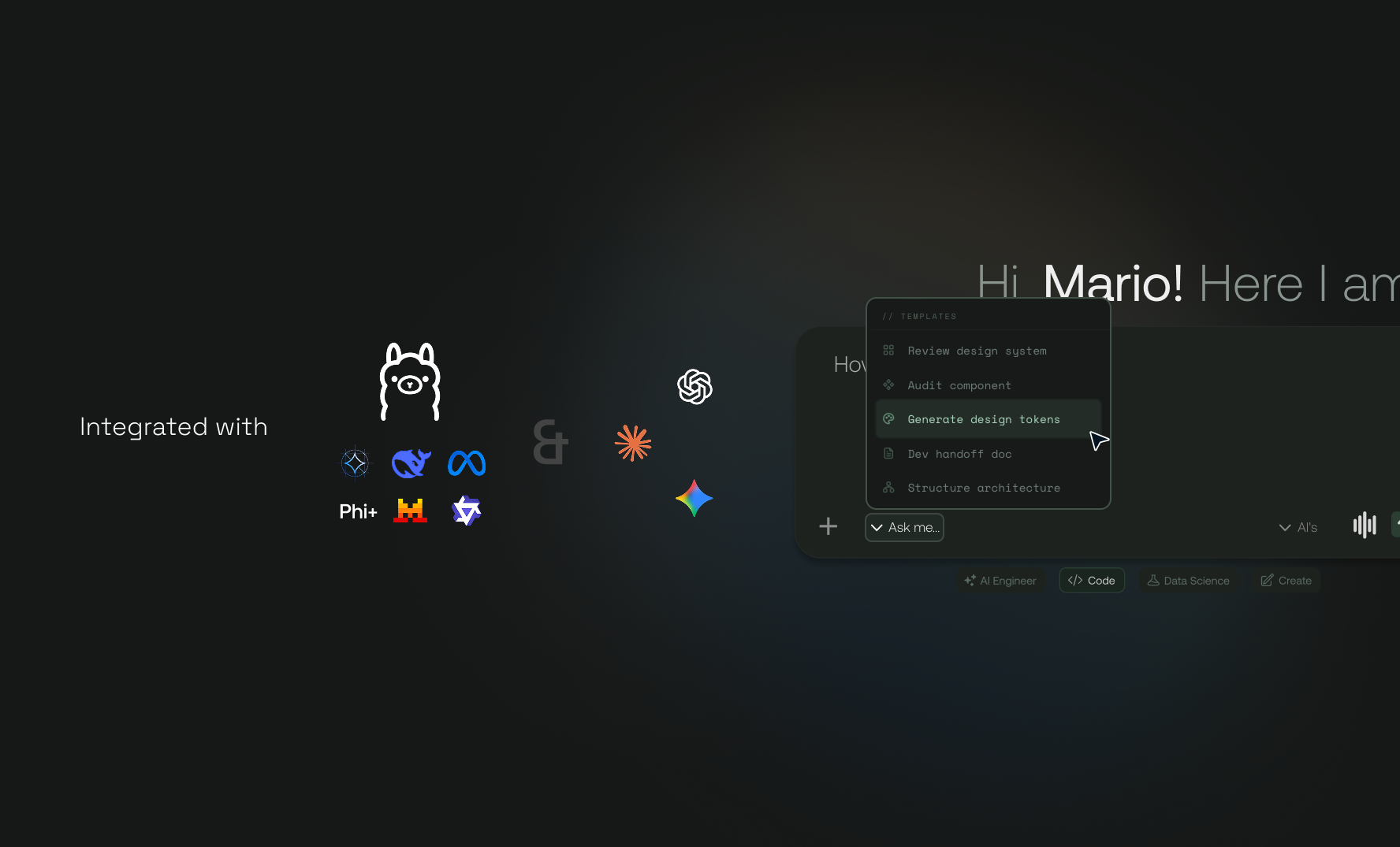
Hi, Mario! Here I am

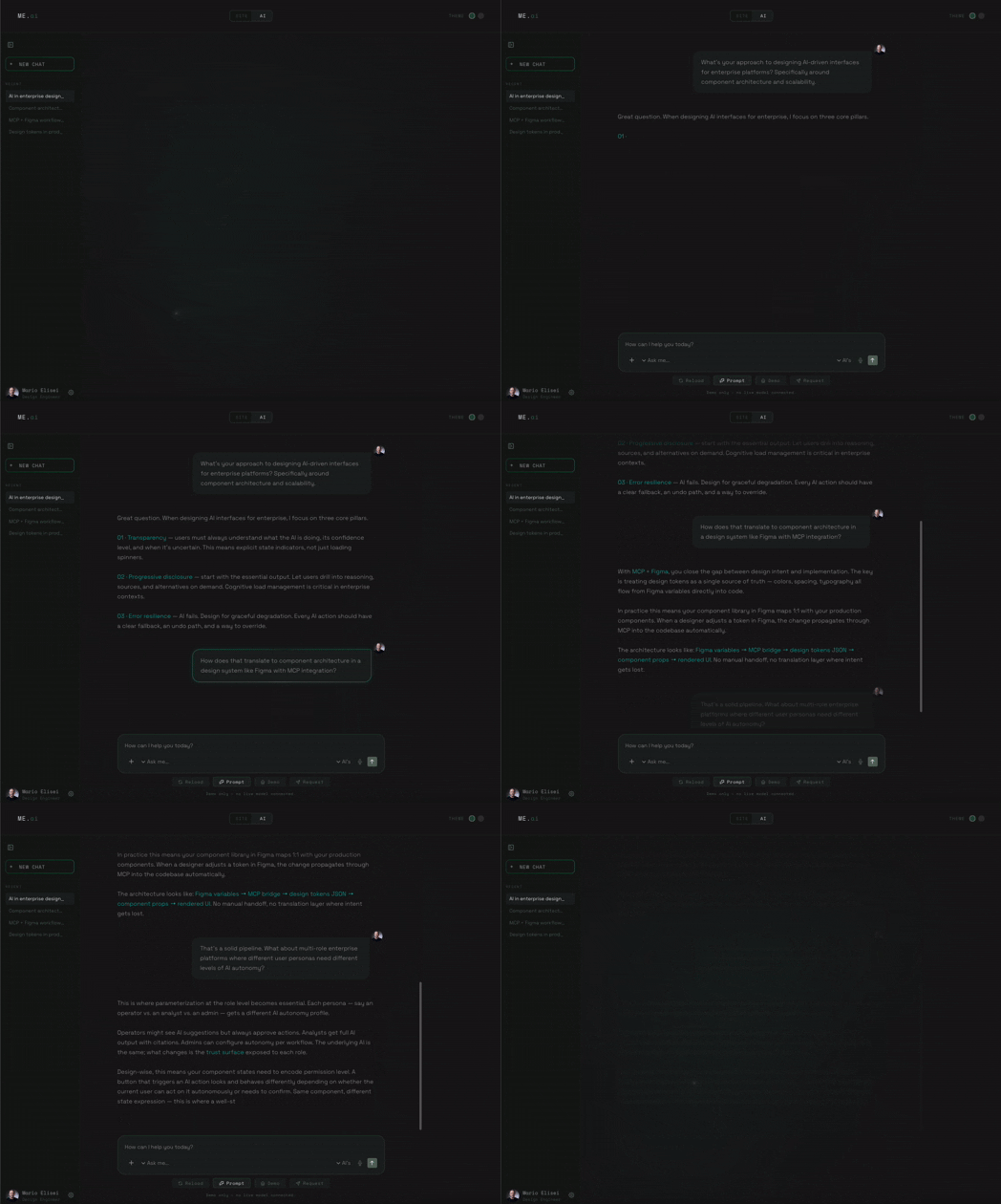
Demo only — no live model connected.
// TEMPLATES
// AI MODEL
AI + Engineer :: Certification Stack
Mario Elisei — Design Engineer building scalable ecosystems for complex platforms. I leverage advanced systems architecture to design and implement highly precise, component-driven digital products.


Computer Engineer with a postgraduate degree in Industrial Automation Engineering and a strong background in design and systems thinking. By combining engineering, design, and AI-driven product development, I build highly complex digital systems that balance scalable architecture, service integration, usability, and visual precision. Currently, I work as the principal design engineer on the AI team, designing systems that integrate artificial intelligence into enterprise platforms, improving workflows, reducing cognitive load, and optimizing operational and energy efficiency.


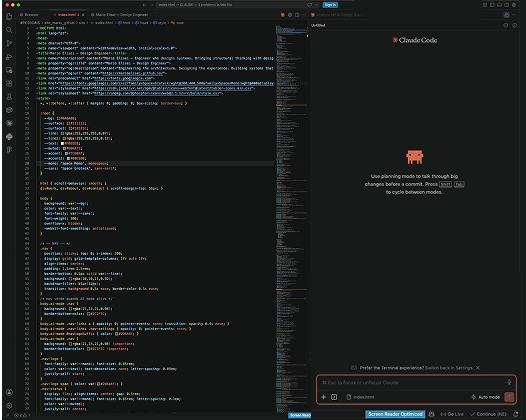
"Design decisions translated directly into code — Figma, Claude and VS Code connected through MCP, closing the gap between intent and implementation."
End-to-end design of a multi-role enterprise backoffice platform. From identity management to workflow automation — structured as interconnected systems across 9 distinct flows.
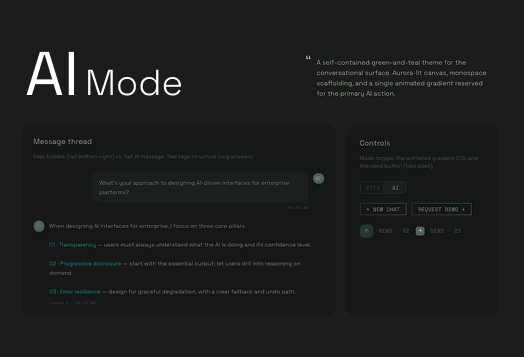
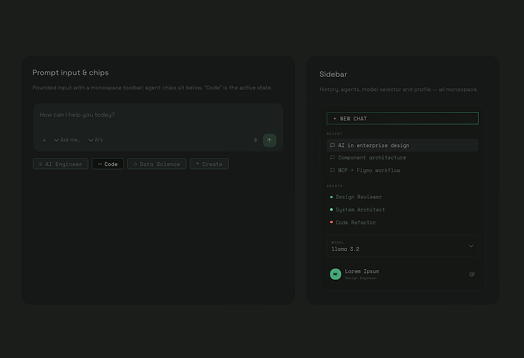
Enterprise conversational AI interface supporting multiple models — Claude, Gemini, OpenAI and Copilot — configurable at parametrization level. Full Light and Dark theme coverage with complex state management across message flows and multi-agent support.
Structured extraction of system flows mapped for development autonomy. Complete CRUD documentation enabling dev teams to implement and adjust independently.
End-to-end design of an API Management platform and Developer Portal serving three of Brazil's largest retail brands — Casas Bahia, Ponto and Extra.com. Designed for sellers and integrators accessing the Marketplace APIs, covering B2B and B2C flows across the entire Grupo Casas Bahia ecosystem.
Upstreams, Extensions, Permissions, Deployments and Configuration — full 5-module APIM platform designed for internal teams managing thousands of API endpoints.
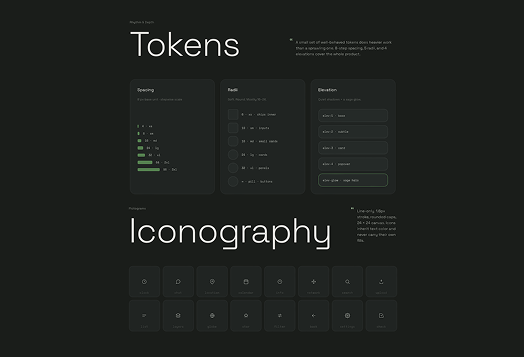
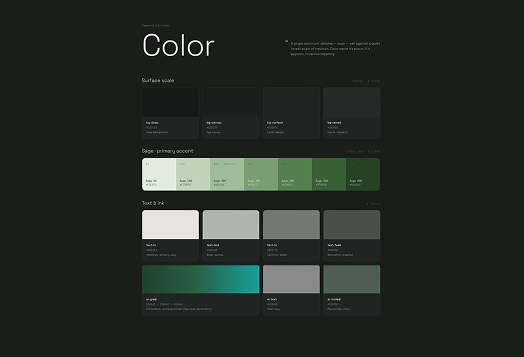
Core design system built to serve all three brands with shared token architecture, component library and documentation — enabling consistent UI across the entire developer platform.
End-to-end delivery of 20+ websites — from domain registration and hosting setup to back-end configuration, visual design, implementation, deployment and ongoing maintenance. Every project owned fully from brief to live.